
Wildlife bridge faces criticism—but challenges explain costs
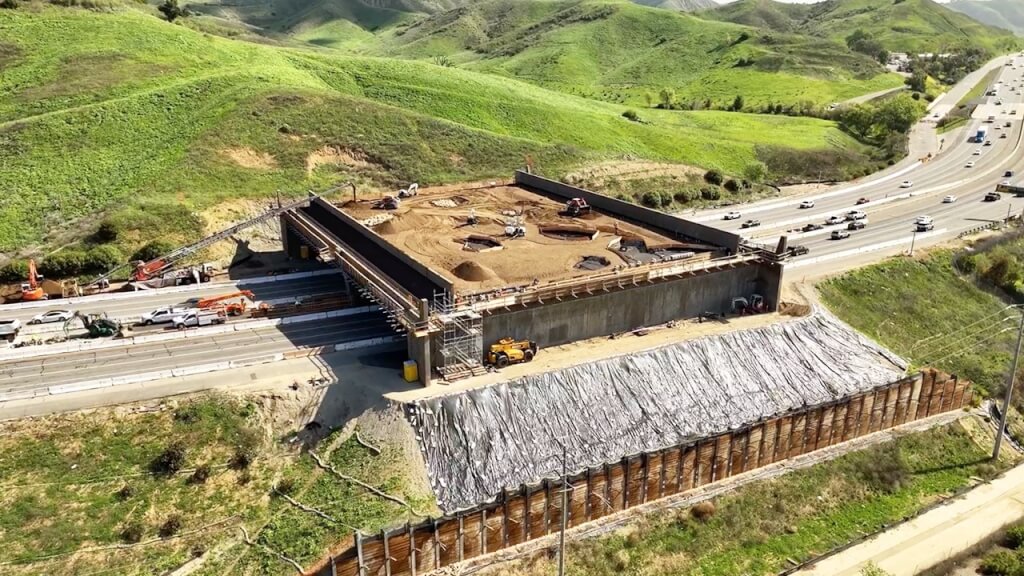
The Wallis Annenberg Wildlife Crossing was always going to be a bold experiment—an attempt to stitch back together a landscape long severed by the Ventura (101) Freeway. Now, as the project progresses, it has also become something else: a flashpoint.
Critics have seized on rising costs and shifting timelines. Originally pegged at roughly $90 million to be paid for mainly by private sources, the price tag has climbed to more than $114 million—an increase driven by inflation, labor shortages and construction complexity—with the public now seemingly on the hook for a large portion of it.
Social media commentary and opinion pieces have amplified the frustration, framing the bridge as another example of California infrastructure drifting over budget and behind schedule. Even the completion date slipped from an earlier 2025 target to 2026.
Those critiques deserve scrutiny. Public trust in large-scale projects depends on transparency and fiscal discipline, particularly when taxpayer dollars are involved—even in a project funded heavily by private philanthropy.
But the criticism often flattens a far more complicated reality. This is not a standard overpass. Engineers are effectively building a living ecosystem over 10 lanes of one of the busiest freeways in the country, reconnecting the isolated Santa Monica Mountains to surrounding habitat. The design requires specialized soils, sound walls, native vegetation and wildlife-guiding infrastructure—features that are essential to function, not decorative extras.
In addition, a near-record rainy season saturated the site, delaying work while crews waited for safe conditions. Building in a canyon, hemmed in by hilly terrain and active traffic, compounds every logistical challenge.
Expensive ecological restoration— down to hyper-local plant selection— is not ideological embellishment; it is central to whether animals will actually use the crossing. Without that fidelity to habitat, the bridge risks becoming an expensive symbol rather than a functional corridor.
Projects of this scale should be questioned, audited and debated—especially when it’s the public’s money being used. But they should also be judged on their purpose. In a region where wildlife populations face genetic isolation and frequent freeway deaths, doing nothing carries its own cost.
The real question is not whether the crossing is ambitious—it clearly is. It’s whether Southern California is willing to invest in repairing the environmental missteps that made the project necessary in the first place.
Comments are closed.